

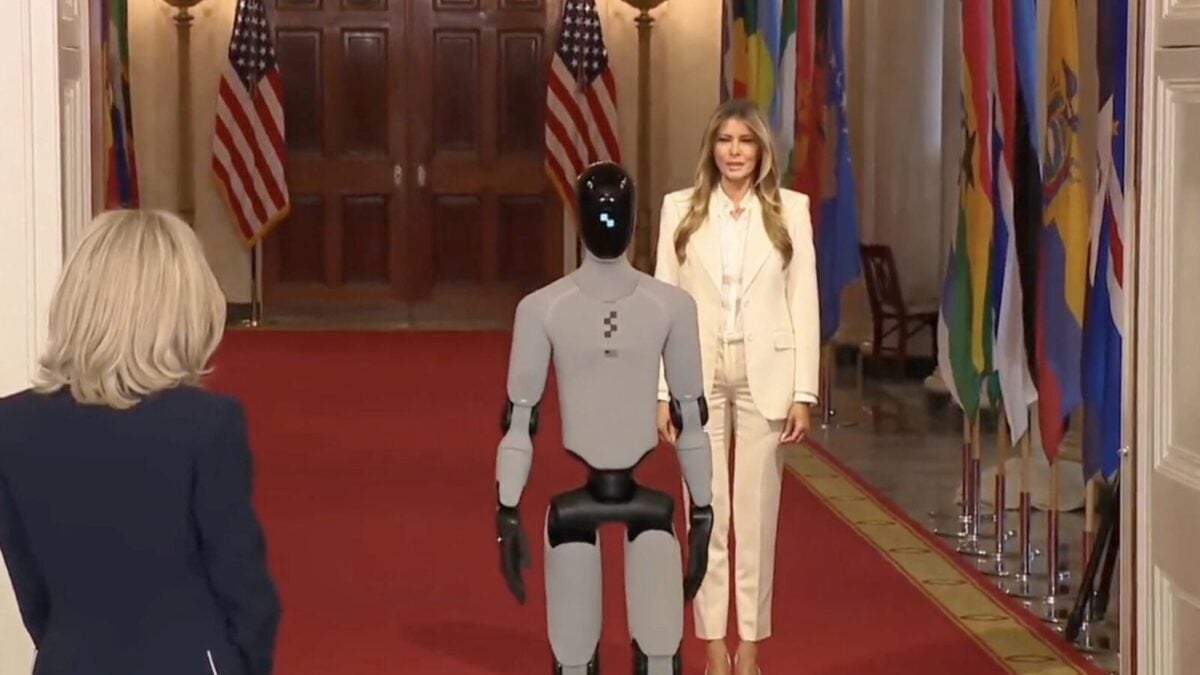
On March 25, 2026, news broke when Brett Adcock, CEO of Figure AI, shared on social media that one of his company’s F.03 concept robots had made history by becoming the "first humanoid robot in the White House." The robot was part of a ceremonial event for First Lady Melania Trump’s initiative, "Fostering the Future Together," aimed at promoting technology in education.
During the event, the humanoid robot delivered a few remarks in various languages to welcome foreign dignitaries before walking away in silence. This sight drew comparisons to a memorable moment from 2024 when a previous president appeared to wander off into the Amazon Rainforest.
But was this truly the first time a humanoid robot has graced the halls of the White House? While Adcock’s claim is noteworthy, history suggests that other forms of robotic presence have occurred in presidential contexts before.
In 2015, President Barack Obama interacted with Alice Wong, a disability advocate, via a telepresence robot. However, this robot, resembling a screen atop a wheeled platform, could hardly be described as humanoid. Another famous humanoid robot, Honda’s Asimo, interacted with President Obama in a different setting, during a visit to Japan’s Museum of Emerging Science and Innovation. This interaction, while significant, did not take place at the White House.
Moreover, during the 2005 Asia-Pacific Economic Cooperation summit, President George W. Bush met a robot called Albert HUBO, which had a humanoid form with an animatronic Albert Einstein head. However, this meeting also occurred outside the White House.
Interestingly, if any previous president had introduced a humanoid robot to the White House, it might have been Ronald Reagan. In 1987, he received a Tomy Omnibot 2000 as a gift during a visit to Purdue University. This robot, designed as an expensive toy and known for its comedic appearances in media, was later displayed at the Reagan Presidential Library. If Reagan did bring the Omnibot back to the White House, it would have made its debut nearly 40 years before the Figure F.03, although some would argue that the Omnibot, with its wheeled base, doesn’t fully qualify as humanoid.
To clarify the situation, a formal introduction of a humanoid robot in the Oval Office by a sitting president would provide a clearer milestone. Such an event would be significant, especially considering the current president has expressed a keen interest in robotics. In a press conference last December, he discussed the role of robots in the workforce, hinting at their increasing relevance in future projects.
"We’re gonna have tremendous workforce availability. We’re also gonna have robots helping us... We’re gonna need the help of robots and other forms of, uh, I guess you could say employment," he stated, emphasizing the integration of robotics into various sectors, including construction and manufacturing.
Adcock’s assertion about the F.03 being the first humanoid robot at the White House could indeed hold water. The implications of such a milestone are intriguing, especially as the conversation around robotics and artificial intelligence continues to evolve.
In conclusion, while the F.03 robot's appearance marks a significant moment for technology and the White House, it is essential to acknowledge the historical context of robotic interactions in presidential settings. The ongoing dialogue about robots could pave the way for future milestones, potentially leading to even more groundbreaking moments in the realm of technology and governance.
Source: Gizmodo News