

Google Consolidates Its AI Coding Arsenal
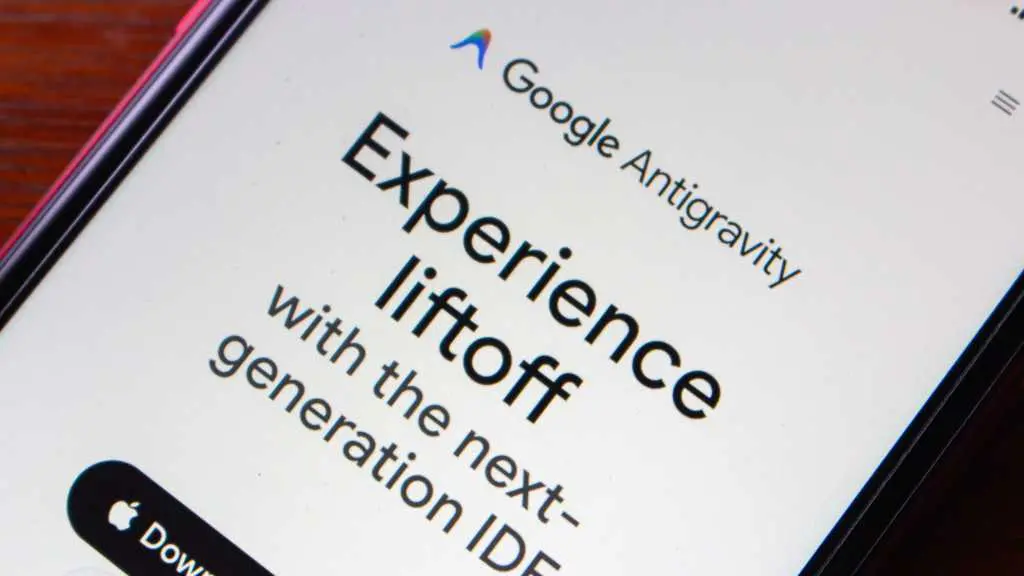
Google has announced a major consolidation of its AI-powered coding tools under a single platform called Antigravity. The second iteration of this agent-first development platform, Antigravity 2.0, was unveiled at Google IO on Tuesday. It introduces a new desktop application, a command-line interface (CLI) known as Antigravity CLI, expanded SDK capabilities, and deeper integration with the Gemini Enterprise Agent Platform. According to the company, the unification is a direct response to customer feedback that highlighted the need for a singular product designed for today's multi-agent reality. Instead of maintaining multiple overlapping offerings like Gemini CLI, Gemini Code Assist, and AI Studio, Google is now channeling all efforts into Antigravity as its premier agent-first development platform.
The original blog post from Google stated: “Listening to your feedback made one thing clear: we can serve you best by pouring our energy into a single product built for today’s multi-agent reality.” The company further explained that it is “unifying our efforts into Google Antigravity, our premier agent-first development platform, which includes a powerful server-side harness and a brand-new terminal experience: Antigravity CLI.” This move is seen as a strategic cleanup of a cluttered product line that had caused confusion among enterprise developers and IT decision-makers.
Benefits for Enterprise CIOs
The consolidation is expected to bring numerous benefits to enterprise CIOs, particularly in the areas of procurement, integration, and governance. Previously, CIOs had to track three overlapping Google products—Gemini CLI, Gemini Code Assist, and AI Studio—each with its own pricing models, IAM policies, and support contracts. With Antigravity as the unified platform, the procurement process becomes simpler, as there is now a single product to evaluate and purchase. This reduction in tool sprawl is a critical advantage in an era where AI tool proliferation is one of the biggest challenges facing IT leaders.
Bhupendra Chopra, chief revenue officer at Kanerika, an AI and data engineering consultancy, noted that CIOs have been struggling with overlapping Google products that come with different pricing structures, identity and access management models, and support agreements. He believes that the unification will future simplification for enterprise decision-makers. Similarly, Advait Patel, a senior site reliability engineer at Broadcom, pointed out that having one platform solves the messy governance problem that arises when enterprises subscribe to multiple Google tools. Abhisekh Satapathy, principal analyst at Avasant, added that the move is likely to reduce AI tool sprawl, one of the biggest challenges currently plaguing CIOs.
Beyond procurement and governance, the unification is also expected to ease integration hurdles. The disparate tools previously behaved as adjacent capabilities, but Antigravity moves them toward a shared execution layer where project context, execution history, and agent state persist across coding, testing, debugging, and deployment activities. This reduces integration overhead, eliminates duplicated tooling connections, and minimizes context switching for development teams. For enterprise software teams, this should result in more streamlined workflows and higher productivity.
Competitive Landscape
Google’s unified platform strategy positions it in direct competition with other hyperscalers and large language model providers. Microsoft is leveraging GitHub Copilot’s massive installed base and Azure’s enterprise contracts to keep developers within its ecosystem. OpenAI is relying on its model superiority and Codex, which now has over two million weekly active users, to retain developers inside ChatGPT and the API ecosystem. Anthropic is also emerging with its own agentic offerings. However, Google’s real differentiator lies in the tight integration between Antigravity and its broader AI stack, including Gemini 3.5 Flash, AI Studio, the Gemini API, and the Gemini Enterprise Agent Platform. This stack spans model, runtime, and managed infrastructure, making it difficult for rivals to replicate.
Satapathy believes that this integrated architecture is particularly appealing to CIOs and enterprise decision-makers. Small model improvements matter less if teams inherit additional systems, integrations, and support overhead. Patel sees Microsoft as Google’s most significant rival in the enterprise AI development market, as AWS has stronger infrastructure gravity but weaker workflow gravity. The battle is shifting from standalone coding assistants to full-fledged agentic development platforms that can handle the entire software development lifecycle.
Pricing and Migration
To make the Antigravity ecosystem more commercially attractive, Google has introduced a new AI Ultra plan priced at $100 per month. This plan offers five times higher Antigravity usage limits than the Google AI Pro tier, along with temporary bonus credits for developers who exceed their quotas. Additionally, Google has reduced the monthly price of its top Ultra tier from $250 to $200. These pricing changes reflect Google’s understanding of the actual consumption patterns of serious agentic workloads. Chopra noted that Google is trying to flatten the upper end of pricing and push serious users toward higher Antigravity limits at a lower per-dollar cost, making consumption-based usage feel cheaper at scale.
However, the migration from existing tools is not without risks. Google has announced that starting June 18, 2026, Gemini CLI and Gemini Code Assist IDE extensions will stop serving requests for free individual users and for subscribers on Google AI Pro and Ultra plans. The company is directing these users to Antigravity CLI instead. The transition will also affect Gemini Code Assist for GitHub, with new installations for GitHub organizations stopping on the same date and service being gradually phased out. The short cutoff timeline poses migration risks. Patel warned that there is no one-to-one feature parity at launch between the old and new offerings. The real risks are in CI/CD pipelines that shell out to Gemini commands, internal plugins that need to be rewritten as Antigravity plugins, and IAM bindings that need to be remapped. Developers are advised to inventory every place Gemini CLI is used, prioritize automation paths, and run both tools in parallel for a few weeks before fully switching.
Enterprise customers using Gemini CLI or IDE extensions through Gemini Code Assist Standard or Enterprise licenses, or via Google Cloud integrations, will get a longer transition window. Google has not provided a specific timeline for phasing out support for these enterprise users. For those interested in migrating, Antigravity CLI is immediately available within Google Cloud environments, and the company plans to provide migration documentation and video walkthroughs soon.
Risks and Considerations
While the consolidation offers clear benefits, it also introduces new risks. CIOs evaluating the broader Antigravity strategy must weigh the advantages of tighter platform integration against the risks of increased vendor lock-in. As more development workflows become dependent on Antigravity’s agent execution layer, switching costs could rise significantly. Chopra warned that CIOs should ask hard exit questions before committing at scale. Patel echoed this sentiment, emphasizing the need to assess long-term dependencies.
Another concern is where the agents actually run. Paul Chada, co-founder of agentic AI startup Doozer AI, pointed out that the old setup ran on the developer’s machine, while the new Antigravity CLI runs on Google’s servers. This means that code leaves the building before the agent touches it, raising potential data security and privacy issues. Organizations with strict data residency or compliance requirements will need to evaluate this architecture carefully.
For now, Google is pushing aggressively toward a unified future for AI-assisted development. The success of Antigravity will depend on how well it can deliver on its promise of reducing complexity while maintaining the flexibility that enterprise teams need. The industry will be watching closely as the June 2026 cutoff approaches and as more CIOs decide whether to embrace the new platform or hedge their bets with alternatives from Microsoft, OpenAI, or other players.
Source: InfoWorld News