

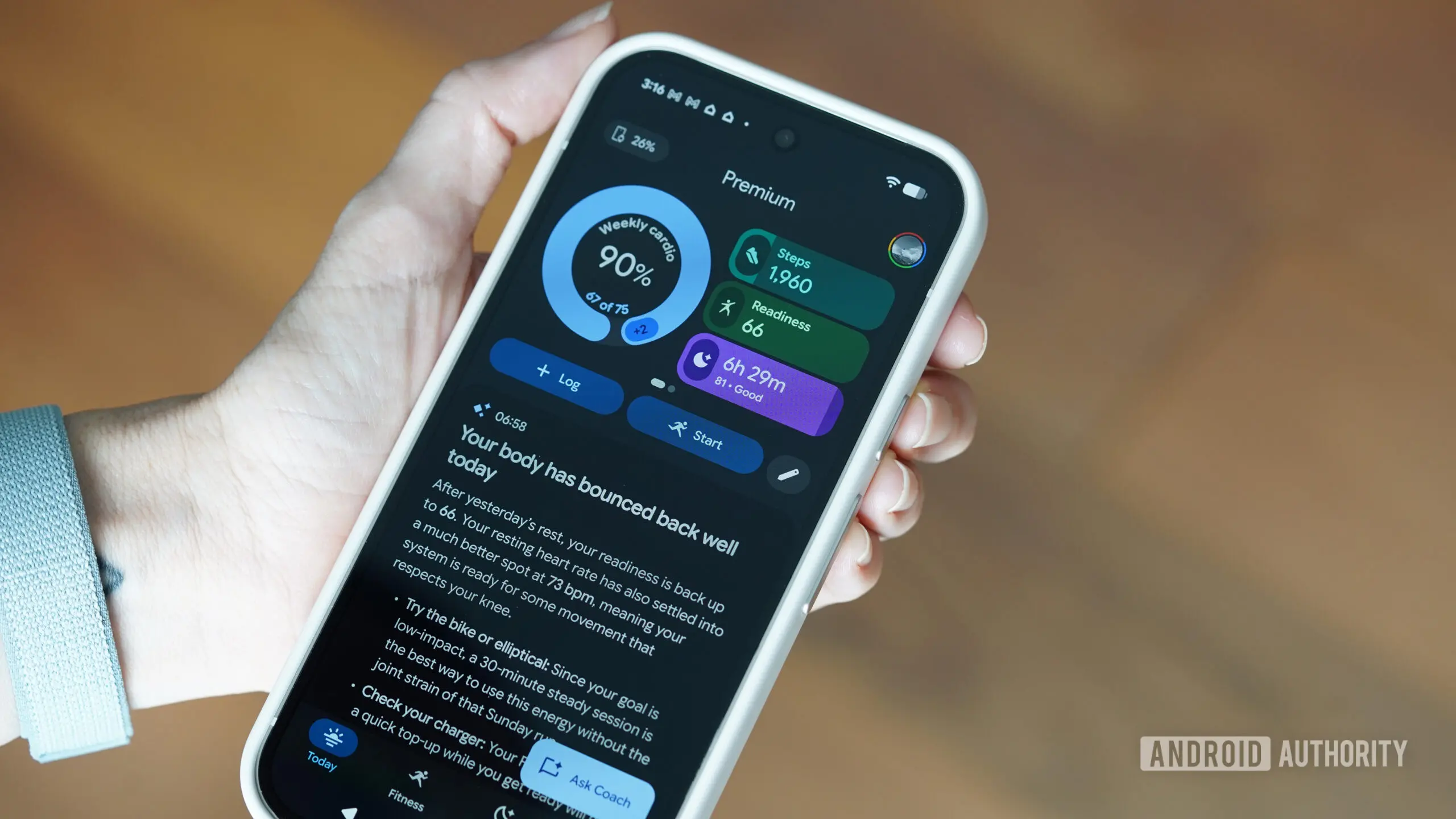
It has been over a week since Fitbit's app transitioned into the new Google Health app, a move that promised a unified health experience combining Fitbit, Google Fit, and Health Connect. However, a significant portion of users are expressing deep dissatisfaction with the redesign, citing a sharp decline in usability despite a more modern appearance.
Survey Results: A Clear Discontent
In a poll conducted by Android Authority, more than 1,500 readers voted on their experience with the Google Health app. The findings are stark: 51% said the app looks better but is worse to use, echoing the sentiments of many reviewers. Only 5% reported liking the functionality but not the aesthetics, while 23% found the app both gorgeous and well-functioning. Another 13% were indifferent, and 9% had not yet received the update.
Key Facts
- 51% of survey respondents believe the app looks good but offers a poor user experience.
- Only 23% think the app is both attractive and functional.
- The most common complaints include missing hourly step graphs, inability to reorder tiles, excessive scrolling, and an intrusive AI coach that offers platitudes instead of useful data.
- Many long-term Fitbit users are actively exploring alternatives (Garmin, Apple Watch) due to the forced upgrade.
- The AI coach occupies too much screen space and often provides repetitive, low-value commentary.
- Workout tracking appears broken: adding exercise post-fact does not incorporate data, GPS map export is missing, and hourly move reminders are gone.
- Food logging and nutrition tracking have become more cumbersome, with reduced support for gram measurements and increased premium friction.
- Over 600 comments on a Reddit thread highlight widespread frustration, with tile reordering and data obfuscation as recurring points.
- Google conducted a public preview prior to launch, but many participants feel their feedback was ignored.
User Experience: From Intuitive to Frustrating
Readers have described the new app as a step backward in every practical sense. One user, stuartgiles, noted that finding basic metrics like yesterday's step count has become 'a near impossible quest.' The Health tab aggregates all data into a single feed, forcing users to manually pin charts for clarity—a process many find unintuitive. Another reader, omrose.farmer, expressed such dismay that they are now considering switching to an Apple Watch after six years of Fitbit use. 'The new Google Health app is making me look at Apple watches,' they wrote. 'Google has ruined a great product and user experience.'
The AI coach, which should theoretically provide personalized insights, has been a major point of contention. Reader craigalanfowler, who participated in the public preview, stated that feedback was not incorporated. They argued that the AI coach would be more valuable if it could be invoked on demand rather than occupying permanent screen real estate. 'The rambling AI text is generally unhelpful and repetitive,' they said. 'If I could occasionally CHOOSE to get into a detailed AI coaching session where I add context, that would be great.'
The Broader Backlash
The resentment is not confined to Android Authority's audience. On Reddit, a thread with over 600 comments has erupted with similar grievances. Users like u/The_Circus_Life_206 called the inability to reorder tiles 'ridiculous.' Others pointed out that key stats are now scattered across multiple screens, requiring excessive scrolling. The AI coach's tone has been described as 'smarmy, obsequious, condescending' by u/Own_Initiative580. Missing features—hourly move reminders, GPS map exports, reliable sleep data—are driving many to consider alternative platforms. Garmin appears to be the top destination for those fleeing the Google ecosystem.
The rollout has exposed deeper issues. Despite the public preview program, Google has either ignored or overridden user feedback. The result is an app that feels simultaneously bloated and underfeatured. The AI coach, meant to simplify health management, instead pads the interface with verbose text that obscures raw data. Some users—like fangz2001—do appreciate the AI's motivational aspect, but they are a minority. Most agree that the balance between insight and annoyance is heavily skewed.
Historical Context
Fitbit's acquisition by Google in 2021 for $2.1 billion was seen as a move to consolidate health tracking under one roof. For years, Fitbit users enjoyed a dedicated, polished app that focused on data clarity. Google's integration strategy, however, has prioritized a unified design language and AI features over established user workflows. The transition to Google Health effectively sunset the standalone Fitbit app, forcing millions of users into an experience many feel was not ready for prime time. This mirrors other controversial Google redesigns—such as the Google Maps update in 2020 or the 2023 Gmail facelift—where aesthetic changes were met with functional complaints. The difference here is the critical nature of health data: users rely on accurate, accessible metrics for sleep, exercise, and wellness decisions.
Google's AI Coach utilizes the same foundation as Fitbit's Daily Readiness Score but wraps it in conversational language. While some appreciate the narrative, the overwhelming feedback suggests that users prefer graphs and numbers over paragraphs of text. The coach's inability to learn from individual behavior further exacerbates the issue. For example, it may suggest improving sleep without acknowledging that the user already knows the cause is a late work meeting. Such generic advice undermines trust in the product.
What Google Needs to Address
For the app to regain user confidence, Google must prioritize functionality over form. The most urgent fixes include restoring hourly step graphs, allowing tile reordering, minimizing the AI coach's footprint, and ensuring that all workout data syncs correctly. Nutritional logging should be returned to its previous granularity. Additionally, the app must respect user feedback from the public preview; otherwise, future updates will be met with skepticism. The company could adopt a more modular approach, letting users customize which insights they see and how often. A balance between AI interpretation and raw data display is achievable—one that shows a trend graph alongside a concise explanation, rather than a wall of text. Without swift action, Google risks losing a dedicated user base that has remained loyal to Fitbit for many years.
Source: Android Authority News