

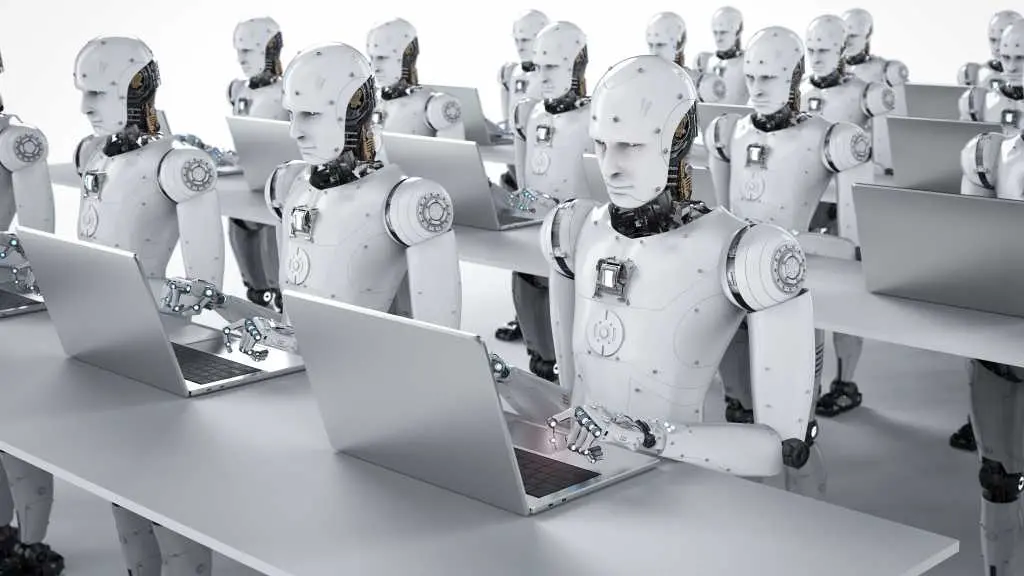
Open source has always been the bedrock of modern software, but its foundation is cracking under the weight of AI-generated contributions. The promise that anyone can contribute is becoming a liability as large language models and coding agents produce a flood of plausible-looking but shallow pull requests. Maintainers, already stretched thin, are drowning in digital noise.
The economics of review asymmetry
Consider the math: a developer can instruct an AI agent to scan an entire codebase, fix typos, and optimize loops in under a minute. The resulting pull request may touch dozens of files. But for the maintainer, reviewing that single PR can take hours. They must verify correctness, check for edge cases, ensure alignment with the project's vision, and often run tests across multiple environments. Multiply this by hundreds of contributors, each using their own AI assistant, and the workload becomes unsustainable. This asymmetry is not just inconvenient; it is a direct threat to the health of open source communities.
Mitchell Hashimoto, founder of HashiCorp, recently announced he is considering closing external pull requests to his projects entirely. Not because he opposes collaboration, but because he can no longer cope with the volume of AI-generated submissions. Similarly, Flask creator Armin Ronacher has described an epidemic of 'agent psychosis'—developers addicted to the dopamine hit of agentic coding, spinning up agents that produce a constant stream of low-effort patches. These changes are not gradual; they are structural.
The rise of 'vibe-slop'
These AI-generated contributions are often described as 'vibe-slop'—code that feels correct because it was produced by a statistical model but lacks the context, trade-offs, and historical understanding that a human maintainer brings. The OCaml community recently witnessed a vivid example: a pull request containing over 13,000 lines of code, entirely generated by AI. The maintainers rejected it, citing copyright concerns, lack of review capacity, and the long-term burden of maintaining such a massive change. One maintainer warned that such submissions could bring the pull request system to a halt.
Even GitHub, the host of the world's largest code forge, is feeling the pressure. As reported by InfoWorld, GitHub is exploring tighter pull request controls and even UI-level deletion options because maintainers are overwhelmed. When the platform itself considers a kill switch for pull requests, we are no longer talking about a niche annoyance. This is a structural shift in how open source is produced.
The death of small libraries
Small, utility-focused libraries are also feeling the heat. Nolan Lawson, author of the popular blob-util library, recently argued that the era of such libraries is over. Blob-util, which helps developers work with Blobs in JavaScript, once had millions of downloads because it was easier to install than to write the utility functions manually. But now, a developer can simply ask an AI to generate the same code in milliseconds. The incentive to maintain a dedicated library vanishes. Lawson points out that these libraries were not just code; they were educational resources where developers learned by reading the work of others. When we replace them with ephemeral AI snippets, we lose that teaching mentality.
Armin Ronacher has suggested a counterintuitive solution: build it yourself. Instead of pulling in a dependency that generates constant churn, use AI to help you write the code internally. This reduces dependency risk but also shrinks the commons. The irony is that AI may reduce demand for small libraries while simultaneously increasing the volume of low-quality contributions to the libraries that remain.
The bifurcation of open source
All of this points to a future where open source is split into two tiers. On one side are massive, enterprise-backed projects like Linux or Kubernetes. These have the resources to build their own AI-filtering tools and absorb the noise. They can afford dedicated maintainers and automated review pipelines. On the other side are the provincial projects—the ones run by individuals or small cores who simply stop accepting external contributions. They retreat into private development, sharing only the occasional release.
This is not the death of open source; it is a redefinition of 'open.' The era of radical transparency and 'anyone can contribute' is giving way to an era of radical curation. The future of open source belongs to the few, not the many. The only thing that remains scarce is human judgment—the ability to say no to a machine-generated submission.
We don't need more code; we need more care. Care for the humans who shepherd communities and create code that will endure beyond a simple prompt. The bazaar was a fun idea while it lasted, but it couldn't survive the arrival of the robots. The future of open source is smaller, quieter, and much more exclusive. That might be the only way it survives.
Source: InfoWorld News