

Displays have undergone a remarkable transformation over the past few decades, evolving from bulky cathode-ray tube (CRT) televisions that dominated living rooms in the 20th century to the sleek, lightweight liquid crystal displays (LCDs) that became standard in the early 2000s. The advent of organic light-emitting diode (OLED) technology marked another leap forward, offering deeper blacks, higher contrast ratios, and faster response times compared to LCDs. Today, OLEDs power everything from high-end smartphones and televisions to virtual reality headsets. Yet, despite these advances, one persistent flaw has plagued the technology: its brittleness. Traditional OLED displays are rigid and prone to cracking when bent, making them ill-suited for the next generation of wearable devices that demand flexibility. That limitation may soon be a thing of the past, thanks to a breakthrough by South Korean researchers in collaboration with scientists at Drexel University in Philadelphia. They claim to have developed a new type of OLED display that is not only bendable but also stretchable, capable of being stretched to 1.6 times its original size without forming a single crease or suffering significant performance degradation.
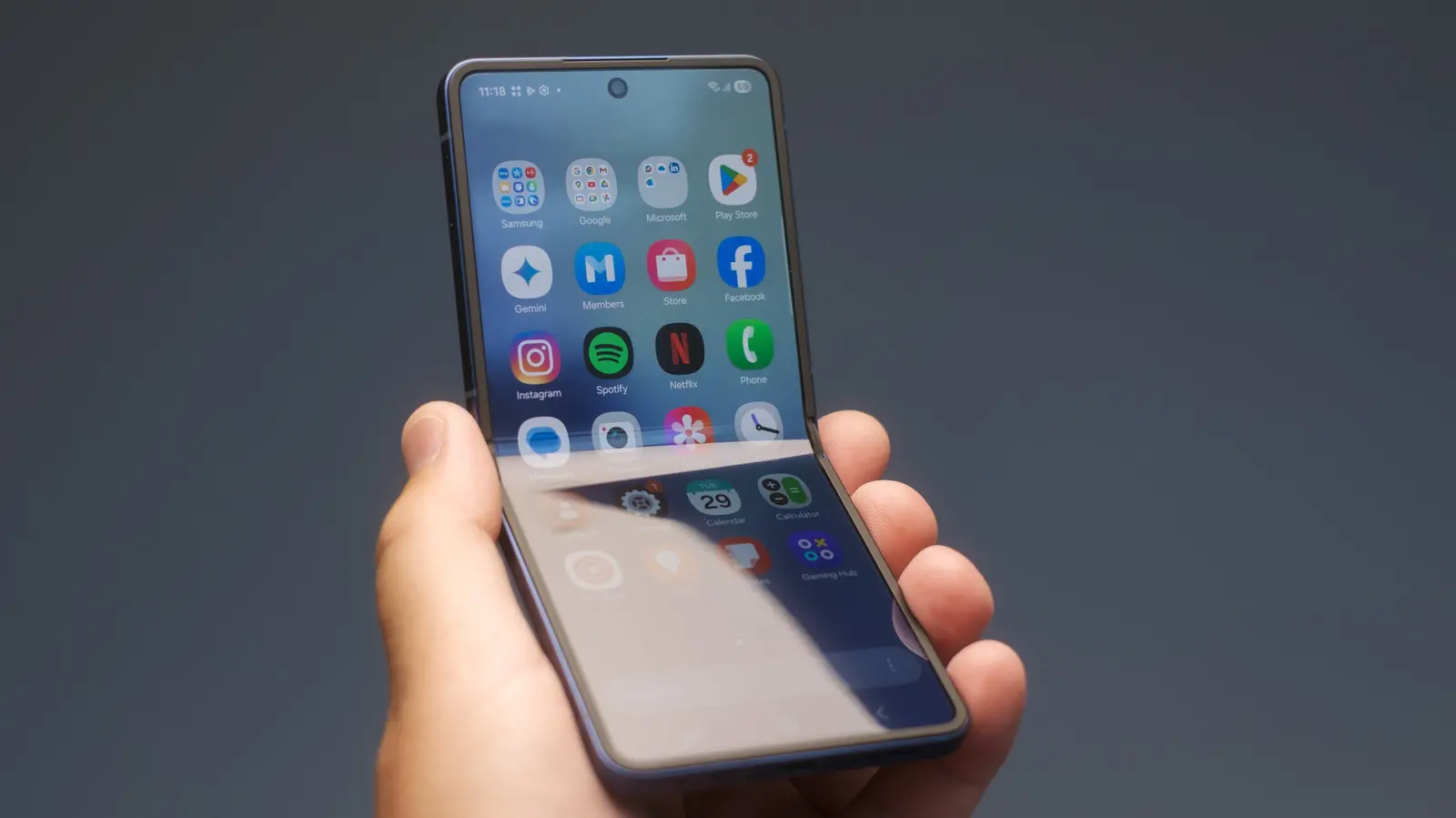
Flexible OLED displays have been commercially available for more than a decade, most notably in foldable smartphones launched by major manufacturers such as Samsung, Huawei, and Motorola. These devices rely on plastic substrates rather than rigid glass to achieve a degree of flexibility. However, the current generation of foldable displays has serious drawbacks. Repeated folding and unfolding cycles cause micro-fractures in the conductive traces and gradual degradation of the organic layers within the OLED substrate. This manifests as visible damage such as crease lines, dead pixels, and reduced image quality. Users of foldable phones often report diminished brightness and color accuracy after just a few months of use. Moreover, the same weakness makes it extremely difficult to integrate flexible OLEDs into wearable devices—such as smartwatches, fitness trackers, or medical patches—that will likely be subjected to repeated stretching and bending cycles as they conform to the human body.
The Evolution of Flexible Displays
The quest for a truly flexible display has been a Holy Grail in consumer electronics for years. Early attempts involved using thin-film transistors on plastic substrates, but these suffered from poor electrical performance and limited durability. Researchers then turned to organic materials, which are inherently more flexible than inorganic semiconductors. OLEDs, which use organic compounds that emit light when an electric current is applied, seemed like a natural candidate. However, the organic layers themselves are delicate and prone to cracking under mechanical stress. To address this, engineers introduced stretchable polymer layers designed to absorb some of the strain. Unfortunately, these polymers often compromise the display’s brightness and energy efficiency because they scatter light or increase electrical resistance. The new flexible OLED design overcomes both shortcomings by employing a nanomaterial called MXene to create transparent and stretchable electrodes.
MXene was first developed in 2011 by researchers at Drexel University’s College of Engineering. It belongs to a family of two-dimensional (2D) materials that combine the electrical conductivity of metals with the mechanical strength and flexibility of ceramics. MXenes are made by etching layers from a bulk material known as MAX phase, which consists of alternating layers of a transition metal carbide or nitride and a group 13 or 14 element. The resulting material is just a few atoms thick, highly conductive, and capable of being stretched without breaking. These properties make MXenes ideal for use in flexible electronics, particularly as electrodes for OLEDs. In conventional OLEDs, the electrodes are typically made of indium tin oxide (ITO), which is transparent but brittle. When bent, ITO develops cracks that disrupt electrical conduction and lead to display failure. MXene electrodes, by contrast, can withstand repeated bending and stretching while maintaining excellent conductivity and transparency.
The researchers tested their MXene-based OLEDs by subjecting them to strain cycles. According to their paper published in the journal Nature, the new display can be safely stretched to 1.6 times its original size—a 60% strain—without any visible damage. While contemporary wearable displays lose a significant amount of brightness when stretched, this nanomaterial-enhanced OLED retains 83% of its light output after 100 cycles rated at 2% strain. Even at higher strain levels, the display continues to function, though with reduced efficiency. The researchers found that the display retains almost 90% of its performance and efficiency when stretched to 60% of its maximum strain limit. This is a dramatic improvement over existing foldable OLEDs, which typically show visible wear after just a few dozen folds.
Nanomaterials and the MXene Breakthrough
The key to the new display’s durability lies in the MXene electrodes, but the researchers also had to address another problem: energy efficiency. Traditional flexible OLEDs suffer from low light output because the polymer layers used to enhance flexibility tend to trap excitons—the excited states that produce light in OLED pixels. An OLED pixel generates light when positive and negative charges from the electrodes combine to form an exciton. The subsequent decay of these excitons releases energy in the form of electroluminescence. In traditional OLEDs, only about 12% to 22% of excitons actually produce light, with the rest dissipating as heat. This inefficiency is a major reason why flexible OLEDs tend to be dimmer than their rigid counterparts. To solve this, the research team developed a new stretchable organic layer called an exciplex-assisted phosphorescent (ExciPh) layer. This layer alters the energy level of the OLED system to allow more excitons to contribute to light emission.
The ExciPh layer works by promoting the formation of exciplexes—short-lived complexes formed between electron-donor and electron-acceptor molecules. These exciplexes then transfer energy to phosphorescent dopants, which emit light with high efficiency. The researchers claim that the ExciPh layer enables more than 57% of excitons to produce light, more than double the efficiency of traditional flexible OLEDs. This makes for a display that is not only more durable but also significantly brighter and more energy-efficient. The combination of MXene electrodes and ExciPh layers represents a holistic approach to solving the twin challenges of flexibility and efficiency. The team believes that this technology could pave the way for OLED displays that are both foldable and stretchable, opening up new possibilities for consumer electronics.
Demonstrations and Future Potential
While the publication of research papers on high-tech displays does not always translate into consumer products, this joint US–Korean research endeavor has already produced working prototypes. Drexel University researchers demonstrated the efficacy of their stretchable OLED technology with two green monochrome displays: one depicted a heart icon, while the other showed a set of numbers. These prototypes were tested under repeated stretching and bending cycles and continued to function without visible damage. Their counterparts at Seoul National University went one step further, developing a full-color stretchable display, replete with stretchable passive-matrix OLEDs. This suggests that the technology is relatively mature and could be deployed in low-power wearable display solutions in the near future.
The authors of the research paper highlight real-time health care monitoring and wearable communications technology as potential applications. Imagine a smartwatch that can be stretched to fit different wrist sizes or a medical patch that displays vital signs directly on the skin without the need for a separate screen. Stretchable displays could also be integrated into clothing, allowing for garments that change color or display information on demand. Such applications would require not only flexible displays but also stretchable batteries and circuitry. Fortunately, contemporary research into stretchable energy storage, such as that discussed in ACS Energy Letters, is progressing in tandem. Scientists have developed stretchable lithium-ion batteries using serpentine-shaped electrodes and elastic polymer electrolytes. These batteries can withstand deformation and maintain performance, complementing the new stretchable OLED technology.
One could envision a future where wearable displays are the norm rather than science fiction. Athletes might use stretchable wristbands that monitor heart rate and display performance metrics. Medical professionals could apply stretchable patches to patients that show real-time data without bulky monitors. First responders might use stretchable displays built into their uniforms to communicate silently or receive navigation instructions. The potential is vast, but there are still hurdles to overcome. The current prototypes are small (just a few inches in size) and require further refinement to achieve mass production at a reasonable cost. Additionally, the long-term reliability of MXene-based electrodes under continuous use has yet to be established. The researchers note that while the display retains 83% brightness after 100 cycles, consumer devices would need to withstand thousands of cycles over several years. Further studies are needed to optimize the materials and manufacturing processes.
Nonetheless, this breakthrough marks a significant step forward in the field of flexible electronics. By leveraging nanotechnology and advanced organic chemistry, researchers have created an OLED display that bends, folds, and stretches without a single crease. As work continues, we can expect to see more prototypes and, eventually, consumer products that take full advantage of this flexibility. The era of rigid screens may finally be coming to an end, replaced by displays that can adapt to the contours of our bodies and our daily lives.
Source: SlashGear News