

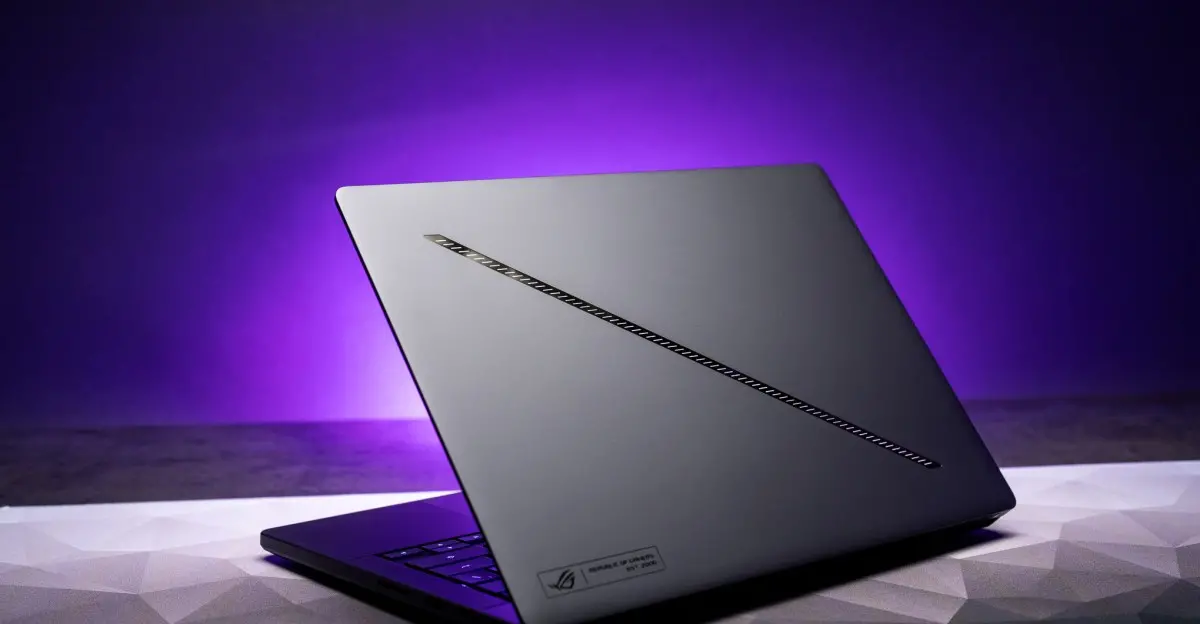
The Asus ROG Zephyrus G14 has long been a benchmark in the 14-inch gaming laptop category. Since its debut in 2020, it has consistently balanced portability, performance, and build quality in a way few competitors could match. The 2026 model continues that tradition with a host of upgrades, including a switch from AMD to Intel’s new Panther Lake CPUs, a brighter OLED panel, and a highly requested full-size SD card slot. Yet, its steep price increase threatens to overshadow its achievements.
Key Facts at a Glance
- CPU: Intel Core Ultra 9 386H (16 cores, Panther Lake architecture)
- GPU: Nvidia GeForce RTX 5070 Ti Laptop GPU (5,888 CUDA cores, 130W TGP)
- Display: 14-inch 2880x1800 120Hz OLED, 500 nits SDR, 1,100 nits HDR peak
- RAM & Storage: 32GB LPDDR5X soldered, 1TB NVMe SSD (review unit)
- Ports: Thunderbolt 4, USB-C 3.2 Gen 2, USB-A, HDMI 2.1, full-size SDXC UHS-II, 3.5mm audio
- Battery: 73Wh, claimed 10+ hours mixed usage
- Weight & Dimensions: 3.48 lbs, 0.63–0.72 inches thick
- Price: $3,450 base, $3,600 as reviewed
The Evolution of a Legend
The original Zephyrus G14 broke ground by stuffing a high-end GPU and CPU into a chassis that weighed under 3.5 pounds. Over the years, it has received design refreshes, including a sleek 2024 redesign that ditched gamer aesthetics for a more professional look. The 2026 model refines that design with subtle changes: more LED segments in the lid's slash lighting, circular rather than rectangular vent holes, and a color scheme that remains understated. The build quality remains excellent, with a magnesium-aluminum alloy chassis that feels premium.
But the biggest change is under the hood. Asus moved from AMD Ryzen processors to Intel's Core Ultra 9 386H, a 16-core Panther Lake chip. This shift brings improved single-core and multi-core performance, better efficiency, and platform features like Thunderbolt 4. The G14 is one of the first laptops to ship with this CPU, and it shows in both benchmarks and real-world use.
Performance: Work and Play Without Compromise
In productivity tasks, the G14 feels snappy. Editing hundreds of 50-megapixel RAW photos in Lightroom Classic is fluid, with previews loading quickly and adjustments applied without lag. Even on battery with Energy Saver enabled, the laptop handles demanding edits without significant slowdown. For video editing, exporting a 4K clip in Premiere Pro took just over four minutes, competitive with much larger machines. The combination of the Intel CPU and RTX 5070 Ti handles creative suites with ease.
Gaming performance is equally impressive. In Battlefield 6 at native resolution with High settings, the G14 averaged 65–70 FPS without DLSS. Helldivers 2 pushed 80–90 FPS, while Marathon achieved around 70 FPS with DLSS set to Quality. The cooling system manages heat well: the keyboard deck remains comfortable even during extended sessions, though the bottom gets warm. The fans are audible under load but not intrusive, especially with headphones. Turbo mode can boost performance by up to 10 FPS, but fan noise increases noticeably.
Battery Life: A New Benchmark for Gaming Laptops
The biggest surprise is battery longevity. In our standardized rundown test, the G14 lasted over 17 hours—double the previous AMD model's 8.5 hours. In real-world use, it consistently delivered more than 10 hours of mixed browsing, Slack, and music streaming at 80% brightness. That kind of endurance is unheard of in a gaming laptop, rivaling even some ultrabooks. When gaming on battery, expect around 5–6 hours for lighter titles, but heavier games will drain the 73Wh battery faster. The Panther Lake chip's efficiency is clearly a game-changer.
Display, Keyboard, and Sound: Top-Tier across the Board
The 120Hz OLED panel is stunning. Colors are vibrant, blacks are inky, and the increased brightness—500 nits SDR, 1,100 nits HDR peak—makes it usable even in bright environments. The 16:10 aspect ratio adds vertical space for productivity. The keyboard offers deep, tactile travel that rivals Lenovo ThinkPads, and the large mechanical trackpad provides a satisfying click. The six-speaker system delivers rich, stereo sound with a surprising amount of bass, easily the best audio on a Windows laptop and comparable to the MacBook Pro.
Port selection is generous: two USB-C ports (one Thunderbolt 4), two USB-A, HDMI 2.1, a headphone jack, and the celebrated full-size SD card slot. This makes it a dream for photographers and videographers who previously had to rely on dongles. The 1080p webcam is adequate in good light but grainy in low light—a minor compromise.
The Price Problem
All these strengths are overshadowed by the price. The base model starts at $3,450, and our review unit with 32GB of RAM costs $3,600. That’s nearly $1,000 more than a similarly configured last-gen AMD model. The global memory shortage (RAMaggedon) and premium components are partly to blame, but it's a bitter pill to swallow. For the same money, you could buy an M5 MacBook Pro 14 and a PlayStation 5 Pro, or a last-gen G14 with an RTX 5060 for under $2,000. The value proposition that made the Zephyrus line famous is gone.
Even within Asus's own lineup, the larger Strix Scar 16 offers better gaming performance for $3,300, though it sacrifices portability. The G14's direct predecessor, with an AMD Ryzen 9 and the same GPU, costs nearly $1,000 less and remains a strong performer. The new G14 is undeniably excellent, but its price demands a compromise that many buyers may not be willing to make.
Bottom Line: Almost Perfect, If You Can Afford It
The 2026 Asus ROG Zephyrus G14 is the closest thing to a do-everything laptop available. It handles work, creative tasks, and gaming with equal aplomb, offers best-in-class battery life, and includes ports that professionals actually need. The OLED screen, keyboard, and speakers are among the best in any laptop. But the price tag is a glaring flaw, and the old G14's value-for-money ethos has evaporated. If you have $3,600 to spare and want one machine to rule them all, this is it. For everyone else, the previous generation or a combination of devices still makes more sense.
Source: The Verge News