

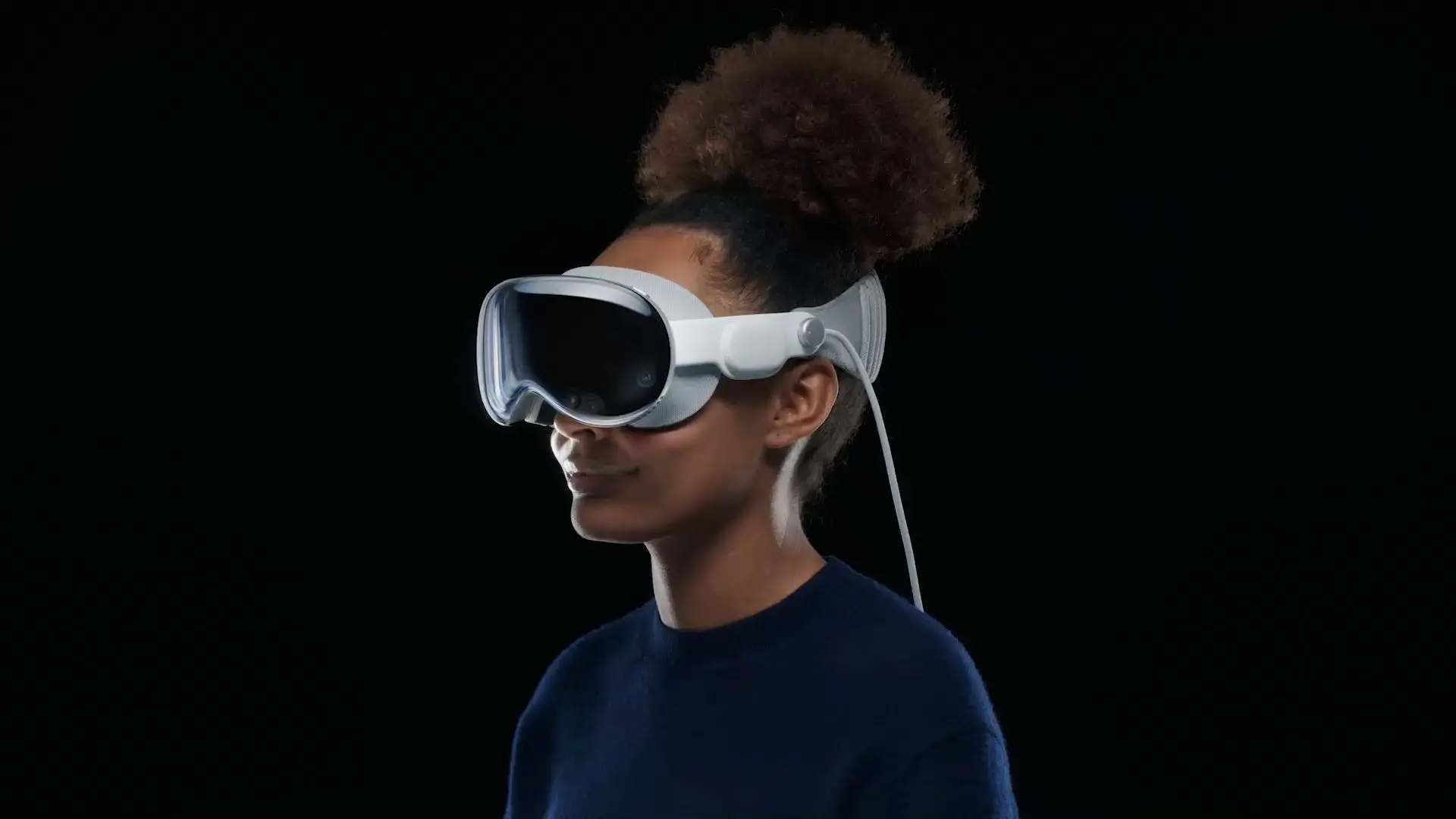
Apple Vision Pro Overview
Apple Vision Pro is Apple's first spatial computer, blending augmented and virtual reality into a headset that launched in February 2024. An updated model with the M5 chip arrived in October 2025, bringing performance and comfort enhancements. Priced at $3,500 for the 256GB base model, the Vision Pro remains a premium device aimed at early adopters, professionals, and enthusiasts.
Should You Buy the Vision Pro?
The $3,500 price tag makes the Vision Pro prohibitively expensive for most consumers. Reviews indicate that it does not easily integrate into existing workflows for the average user. Some early adopters have even regretted their purchase. However, the headset excels at watching movies, viewing 3D videos, and serving as a high-resolution display for a Mac. At over 1.3 pounds, the Vision Pro can cause fatigue, but the new Dual Knit Band – introduced with the M5 model – improves comfort by distributing weight more evenly. The external battery pack and bulky Travel Case make it less portable than competing headsets. Apple advises potential buyers to try the device at an Apple Store and conduct thorough research before purchasing. The M5 refresh makes now a good time to buy, as another update is at least two years away.
Design and Build
The Vision Pro resembles ski goggles with a single piece of laminated glass front and an aluminum alloy frame. A magnetic Light Seal conforms to the face to block out light. The new Dual Knit Band features two knitted straps – one around the back and one over the top – with counterweights for balanced weight distribution. The Fit Dial allows for a customized tight fit. The headset is available only in silver with matching gray Light Seals and bands. Physical controls include a Digital Crown for adjusting immersion and a camera button for capturing 3D spatial photos and videos.
Display Technology
Inside, two micro-OLED displays deliver over 4K resolution per eye, totaling 23 million pixels. The M5 model renders 10% more pixels for sharper visuals and supports refresh rates up to 120Hz, reducing motion blur. The external EyeSight display shows the wearer's eyes to others, indicating whether the user is in an immersive or transparent mode. Zeiss optical inserts are available for prescription and reading glasses, priced at $149 and $99 respectively, attaching magnetically to the internal lenses.
Cameras and Sensors
The Vision Pro is equipped with 12 cameras and five sensors. Two cameras transmit over a billion pixels per second to depict the real world in augmented reality mode. Others enable head tracking, hand tracking, and 3D mapping. Infrared flood illuminators improve hand tracking in low light, while LiDAR sensors determine room dimensions. Four infrared cameras and LED lights inside the headset track eye movements for navigation. Optic ID uses iris scanning for authentication, similar to Face ID. A 3D camera captures spatial photos and videos, with a clear indicator when recording is active.
Audio and Microphones
Speakers built into the audio straps deliver spatial audio with dual-driver pods positioned near each ear. The system analyzes room acoustics to adapt sound. Six microphones handle calls, voice commands, and video recording. The Vision Pro pairs with AirPods Pro 2 (USB-C) and AirPods Pro 3 for lossless, low-latency audio.
Processors and Performance
The M5 chip uses third-generation 3-nanometer technology with a 10-core CPU and 10-core GPU. It features a 16-core Neural Engine that improves AI-powered tasks like Persona generation and spatial scene creation by up to 50% compared to the M2. Unified memory bandwidth is 153GB/s, and the device includes 16GB RAM. The R1 chip processes camera, sensor, and microphone inputs in under 12 milliseconds for lag-free visuals. Storage options range from 256GB to 1TB.
Battery Life
The M5 Vision Pro lasts up to 3 hours for video playback and 2.5 hours for general use – 30 minutes longer than the M2 model. The external battery pack connects via a braided cable and can be swapped for extended use. When plugged into a power adapter, the headset can run all day.
visionOS and Software
visionOS uses eye tracking, hand gestures, and voice commands for navigation. Apps can be placed anywhere in virtual space, resized, and stacked. The system supports Mac display mode with Wide and Ultrawide options (equivalent to two 4K monitors). Travel Mode and Guest Mode are built-in. visionOS 26 introduced persistent widgets, enhanced Personas with more lifelike hair and expressions, spatial scenes for 2D photos, and a Jupiter Environment. Upcoming visionOS 27 will add face gestures, Vehicle Motion Cues, improved hearing aid support, generated subtitles, and power wheelchair control via eye tracking.
How to Buy
The M5 Vision Pro is available from Apple stores and online in select countries including the US, UK, Canada, China, France, Germany, Japan, and Australia. The order process requires a Face ID scan to determine the correct Light Seal and band size. No trade-in option exists for the M2 model. The box includes the Dual Knit Band, Light Seal, two cushion sizes, a cover, polishing cloth, battery, USB-C cable, and power adapter.
Medical Warnings
Apple advises consulting a healthcare professional before using the Vision Pro if you have heart conditions, chronic headaches, dizziness, eye conditions, psychological issues, inner ear disorders, dry eyes, skin allergies, seizures, or balance issues. Pregnant individuals should exercise caution due to increased risk of nausea or loss of balance. The device may interfere with pacemakers, hearing aids, and defibrillators.
Future Developments
Apple is reportedly developing smart glasses similar to Meta Ray-Bans without a display, focusing on AI and audio, with a launch expected in late 2026 or 2027. A cheaper version of the enclosed headset is not in active development and will take at least two years. Apple's long-term AR glasses project was halted in early 2025, but Tim Cook remains committed to the technology. Ming-Chi Kuo predicts AR contact lenses could appear in the 2030s. Health testing features using eye tracking to detect depression or heart issues are under development.
Source: MacRumors News