

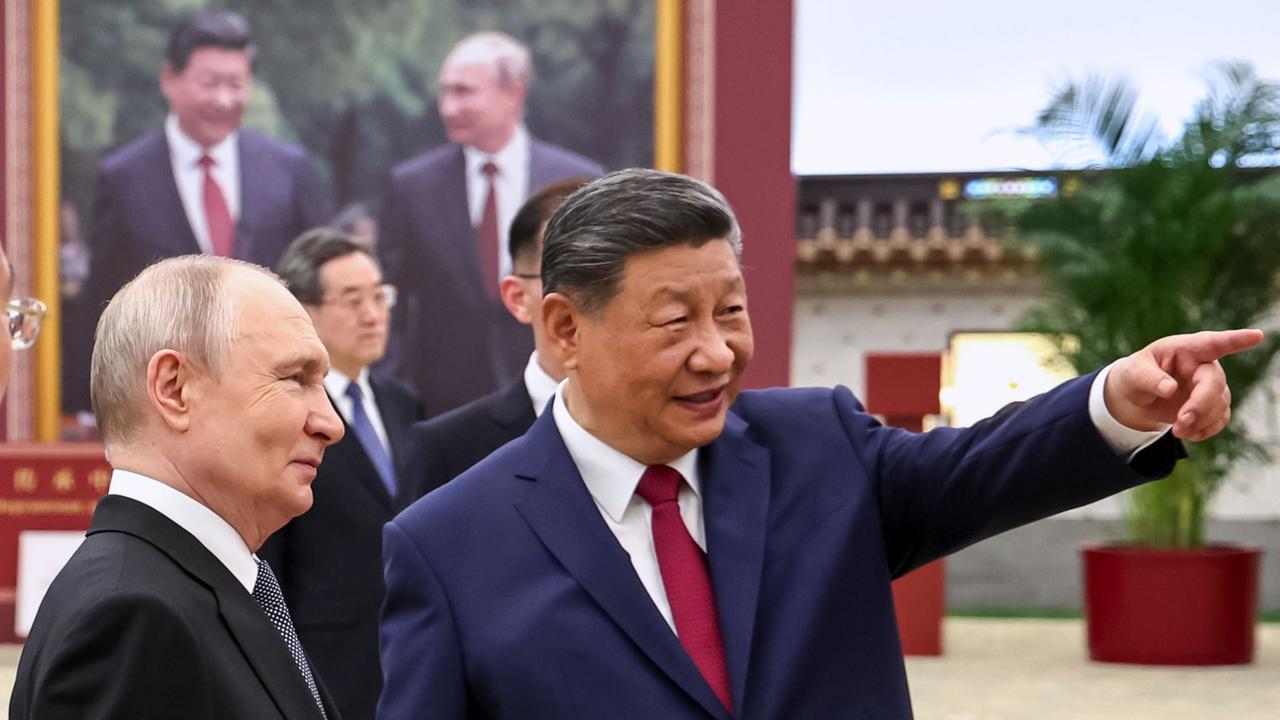
Strategic Partners Meet in the Great Hall of the People
Just days after hosting US President Donald Trump, Chinese President Xi Jinping welcomed Russian President Vladimir Putin to Beijing for a state visit that underscored the deepening ties between the two nations. The meeting, held in the Great Hall of the People, produced a flurry of bilateral agreements covering energy, trade, and infrastructure, but conspicuously lacked a final consensus on the long-awaited Power of Siberia 2 natural gas pipeline.
According to China's state news agency Xinhua, Xi told Putin that China and Russia have succeeded in "continuously deepening" their strategic cooperation. Xi also warned against "unilateral and hegemonic counter-currents that are spreading," an apparent jab at the United States and its allies. The timing of the visit—so close to Trump's own trip—was widely seen as a deliberate signal of Beijing's balancing act between the world's two largest powers.
Energy Cooperation Takes Center Stage
Putin highlighted the energy sector as the driving force of economic collaboration between the two countries. "Amid the crisis in the Middle East, Russia continues to maintain its role as a reliable supplier of raw materials, while China remains a responsible consumer of these resources," the Kremlin chief said. This was a clear reference to the ongoing US-Israeli military campaign against Iran and the de facto blockade of the Strait of Hormuz, a critical chokepoint for global oil shipments.
Xi, for his part, emphasized the need for a "complete cessation of hostilities" in the Middle East. Chinese state media quoted him as saying that an early end to the conflict would help reduce disruptions to energy supply stability, industrial supply chains, and the international trade order. The two leaders also signed several new energy contracts, further strengthening Russia's position as China's top supplier of oil and gas.
Russia's Growing Dependence on China
It is no secret that Russia's economy has become significantly more dependent on China than the reverse. The People's Republic is the world's largest buyer of Russian fossil fuels, and after Western sanctions were imposed following Russia's full-scale invasion of Ukraine in 2022, Beijing became Moscow's most vital economic partner. The trade volume between the two countries has soared, reaching record highs in 2025 and continuing to grow in 2026.
However, this dependency is not without its costs for Russia. Chinese negotiators are known for driving hard bargains, and Beijing has leveraged its position to secure favorable terms in everything from oil prices to infrastructure investments. The imbalance was evident during the summit, as Russia pushed for progress on several major projects while China maintained a cautious, deliberate pace.
Ukraine: A Delicate Silence
On the topic of Russia's war against Ukraine, both leaders offered only restrained comments. A joint statement released after the talks said the two sides "support all efforts that contribute to the establishment of a long-term and lasting peace," and that a solution should be found through negotiations and dialogue. Notably, China did not issue any call for Russia to end its invasion, nor did it criticize the war directly.
Instead, the statement praised China's "objective and impartial stance" regarding the conflict—a phrase Moscow has repeatedly used to justify its position. The document also included the Kremlin's favorite formulation about the "need to completely eliminate the root causes of the Ukrainian crisis," which Russia interprets as including Ukraine's constitutional aspiration to join NATO. For Beijing, this ambiguous language allows continued engagement with both Russia and Ukraine, preserving its role as a potential mediator while avoiding any rupture with Moscow.
Power of Siberia 2: Still on the Drawing Board
The most notable absence from the summit deliverables was a final investment decision on the Power of Siberia 2 pipeline, a project that would carry 50 billion cubic meters of natural gas per year from Russia's Yamal Peninsula through Mongolia to China. Kremlin spokesman Dmitry Peskov told Russian media that the two sides had reached a "basic agreement" on the pipeline's route and construction method, but no clear timeline was established.
Moscow has been pushing the project for years, partly because the gas fields involved were originally intended for export to Europe. Since the war in Ukraine, Russia has lost most of its European gas market and urgently needs alternative buyers. China, however, has hesitated. Beijing is in a strong bargaining position: it already receives gas from the existing Power of Siberia 1 pipeline (which started operations in 2019) and from other sources such as Central Asia and LNG imports. Chinese negotiators have reportedly demanded a lower price and better terms, leading to prolonged talks.
The absence of a deal on Power of Siberia 2 is a significant setback for Putin, who had hoped to announce a breakthrough during the visit. The pipeline would not only boost Russia's energy exports but also cement the strategic partnership with China for decades to come. For China, the timing is less urgent; the country's demand for natural gas is growing, but it has diversified its supply sources to avoid over-reliance on any single provider.
Broader Geopolitical Implications
The Xi-Putin summit took place against a backdrop of shifting global alliances. The United States under President Trump has pursued an "America First" policy that has strained relations with both China and Russia, albeit in different ways. Trump's recent visit to Beijing focused on trade and tariffs, while his administration has simultaneously imposed sanctions on Russia and provided military aid to Ukraine—though at a reduced level compared to previous US administrations.
For China, the goal is to maintain a delicate balance: deepening ties with Russia without provoking a full confrontation with the US. For Russia, the goal is to secure a reliable economic partner that can sustain its war effort and offset Western sanctions. The summit demonstrated that while the partnership is strong and growing, it is not unconditional. China will support Russia on its own terms, and those terms do not yet include a major new pipeline commitment.
Trade and Infrastructure Deals Signed
Beyond energy, the two countries signed a range of agreements covering agriculture, technology, and transportation. A new memorandum of understanding on the development of the Northern Sea Route was also concluded, envisioning increased shipments of Russian liquefied natural gas to China via the Arctic. In agriculture, China agreed to lift some restrictions on imports of Russian grain and meat, providing a boost to Russia's struggling farm sector.
On the financial front, the two sides reaffirmed their commitment to increasing the use of national currencies—the ruble and the yuan—in bilateral trade, reducing reliance on the US dollar. This aligns with both countries' long-term goal of de-dollarizing their economies, though progress has been slower than anticipated due to liquidity and regulatory hurdles.
Historical Context and Future Outlook
Relations between China and Russia have evolved from wary neighbors during the Cold War to a comprehensive strategic partnership in the 21st century. The turning point came after Russia's annexation of Crimea in 2014, when China began to step up economic engagement as Western sanctions cut Russia off from traditional markets. The full-scale invasion of Ukraine in 2022 accelerated this trend, with Chinese exports of dual-use goods—such as microchips and industrial equipment—helping Russia sustain its military industry.
Looking ahead, the partnership is likely to continue deepening in areas where interests align, such as energy, infrastructure, and opposition to US hegemony. However, differences remain: China's economic weight gives it leverage that it has not been shy to use, and Moscow's growing dependence creates vulnerabilities. The absence of a pipeline deal is a reminder that even close allies bargain hard over strategic assets.
In the meantime, the two leaders will continue their regular summitry, with plans for Xi to visit Moscow later this year. The next meeting may bring the Power of Siberia 2 deal closer to reality—or reveal further tensions in a relationship that is simultaneously cooperative and competitive.
Source: tagesschau.de News