

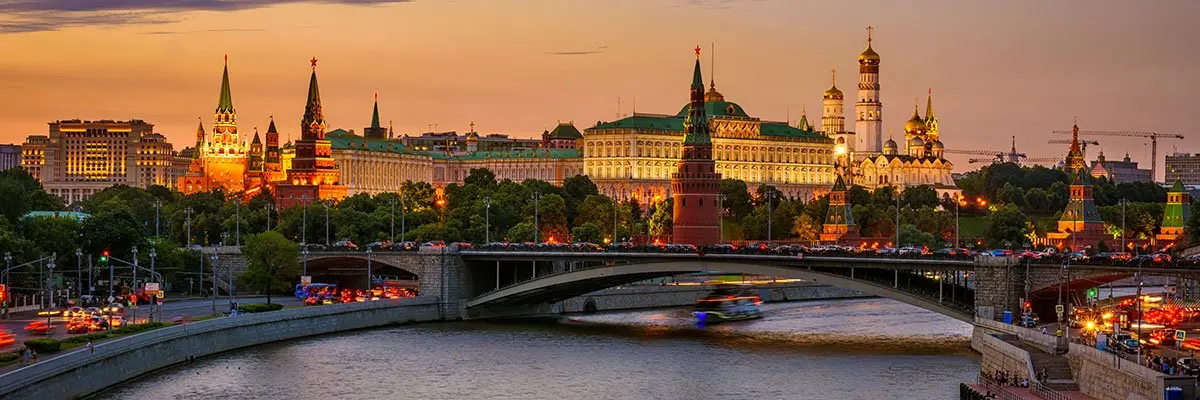
In Moscow, artificial intelligence (AI) has transcended its science fiction origins to become the backbone of urban management, provided the city retains sovereignty over its technology capabilities. Speaking at a fireside chat at Gitex AI Asia 2026 in Singapore, Sergey Cheremin, minister of the government of Moscow and head of the department for external economic and international relations, outlined the Russian capital’s use of AI across public services, while cautioning against over-reliance on foreign technology vendors. The event, held in the heart of Asia’s tech hub, brought together global leaders to discuss the future of smart cities, and Moscow’s approach served as a case study for balancing innovation with security.
Managing a metropolis of 15 million people with a GDP exceeding $450 billion demands an efficient digital ecosystem, Cheremin noted. Today, the city implements AI in more than 130 programs, spanning traffic control, healthcare, education, waste management and construction. These applications are not merely experimental; they are deeply embedded in daily operations. For instance, Moscow’s traffic management system uses AI to optimize signal timings and reroute vehicles in real time, saving commuters up to 30% of travel time. The system processes data from thousands of sensors, cameras, and GPS feeds, learning from patterns to predict congestion before it occurs. Similarly, in healthcare, AI-assisted radiology can identify diseases and predict cancers with high accuracy, reducing diagnostic errors and easing the burden on medical professionals. The city has also deployed AI in education to personalize learning paths for students, and in waste management to optimize collection routes based on fill-level sensors.
“AI for us is not science fiction or about The Matrix,” Cheremin told the audience, referring to the 1999 movie that predicted a world dominated by AI. “It’s really online management of all municipalities.” He emphasized that the goal is to make city services seamless and proactive, anticipating needs rather than reacting to problems. This vision requires a robust digital backbone, which Moscow has built over the past decade through significant public investment. The city’s data centers process terabytes of information daily, supporting everything from tax collection to emergency response.
But as governments around the world race to build their computing capacities, Cheremin stressed that true security will only come from having true digital sovereignty. “For big megacities like Moscow, it’s very important to provide security for your infrastructure, and you cannot be dependent on a few companies or technical solutions,” he said. “You cannot allow the vendors to dictate how you are going to manage the city.” This stance reflects a growing global concern about the geopolitical risks of outsourcing critical infrastructure to foreign firms, especially when those firms may be subject to sanctions or political pressure. Moscow’s approach involves developing all strategic and sensitive technologies in-house, with dedicated IT teams that build custom software and hardware. For example, the city’s urban computing platform is entirely homegrown, from the operating system to the AI algorithms. This level of control ensures that data remains within national borders and that systems cannot be remotely disabled by external actors.
To mitigate these risks and protect against cyber attacks that could trigger catastrophic electricity blackouts or system failures, Cheremin said all strategic and sensitive technologies for Moscow are developed in-house by expert IT teams. “It’s not good to be isolated, but it’s also important to be sovereign so you’re not dependent on anyone,” he added. The city has invested heavily in cybersecurity, including a dedicated cyber defense unit that monitors networks around the clock. Moscow’s security network includes over 260,000 CCTV cameras integrated into a single data-processing system. According to the minister, this has slashed the city’s crime rate by 90% over the past decade and reduced car thefts by 15 times. The cameras are not just for surveillance; they use AI to detect anomalies, such as unattended bags or suspicious behavior, and alert authorities in real time. This system is a testament to the benefits of vertical integration, where hardware and software are designed together for optimal performance.
From Moscow to Singapore
Noting the importance of international knowledge-sharing, Cheremin recalled his first trip to Singapore in 2010 to study the city-state’s advanced intelligent transport management systems. He realized that foreign systems could not be transplanted wholesale into another city due to differences in culture, regulations, and infrastructure. Moscow studied models from New York, London, Paris and Barcelona, among other cities, and engaged companies such as Siemens, Cisco and Thales, eventually creating a traffic management system tailored to its needs. The experience taught Moscow that digital sovereignty does not mean autarky; rather, it means adapting global best practices to local conditions while maintaining control. For instance, Moscow’s biometric subway access system, which uses facial recognition for payment, was inspired by Singapore’s contactless transit but built with Russian algorithms and hardware to ensure data privacy.
Today, the city’s transport system uses AI to optimize traffic flow, reducing congestion and saving commuters up to 30% of travel time. Furthermore, subway access is now processed through automatic biometric billing, removing the need for traditional transport cards. This system has not only improved convenience but also reduced fare evasion. In urban planning, Moscow has spent a decade building a digital twin, a virtual model of the city featuring more than 9,000 data layers, from underground infrastructure such as subway lines to district demographics, allowing planners to predict the impact of future construction projects. The digital twin is updated in real time using data from sensors and citizens, enabling simulations of traffic changes, new buildings, or emergency situations. For example, planners can test how closing a street for construction will affect traffic flow and air quality before any work begins. This capability saves time and money, and reduces disruption to residents.
Healthcare and social returns
AI has also delivered economic and social returns for the city. In healthcare, AI-assisted radiology can identify diseases and predict cancers with high accuracy, saving both time and money for Moscow’s healthcare system. The city has integrated AI into its electronic health records system, allowing doctors to access decision-support tools that flag potential diagnoses or adverse drug interactions. Additionally, AI is used to optimize appointment scheduling, reducing wait times for patients. In education, AI platforms adapt to student performance, providing extra help in subjects where they struggle. The city has also deployed AI in waste management, where trucks equipped with cameras and sensors identify bins that need emptying, reducing fuel consumption and emissions.
Global partnerships and geopolitical context
Despite his strong advocacy for digital sovereignty, Cheremin reiterated that Moscow is not turning its back on the global tech community. He pointed to city-to-city diplomacy, noting that Moscow actively shares its technological playbook with cities across Southeast Asia, China, India, Africa and Latin America. “We understand that the situation is difficult...and it becomes unpredictable sometimes,” he said, referencing global geopolitical tensions that make events such as Gitex vital for sharing technological experience. Moscow has signed memorandums of understanding with several cities to exchange best practices in smart city development. For instance, Moscow and Beijing have collaborated on AI for public safety, while Moscow and Shanghai are working on digital twin technology. These partnerships allow Moscow to learn from others while also demonstrating the benefits of its sovereign approach.
“We are really proud for several decades that we have a very good partnership with Singapore,” Cheremin said. With 80% of the world’s population expected to live in cities within two decades, he added, Moscow will continue to strengthen its partnerships with ASEAN and Chinese cities such as Beijing, Shanghai and Chengdu to build a stable urban platform. The minister emphasized that technology transfer is not a one-way street; Moscow also gains valuable insights from its partners. For example, Singapore’s experience with water management has informed Moscow’s own efforts to reduce water leakage in its aging infrastructure. The exchange of ideas helps cities worldwide become more resilient and efficient.
Ultimately, Moscow’s journey illustrates that digital sovereignty and international collaboration are not mutually exclusive. By building its own technology stack, the city has gained the confidence to engage globally without fear of dependency. As AI continues to evolve, Moscow plans to expand its use of generative AI for citizen services, such as chatbots that can handle complex queries about permits or taxes. The city is also exploring AI for environmental monitoring, using drones and satellites to track pollution and green spaces. These initiatives, combined with a focus on sovereignty, position Moscow as a leader in the next generation of urban management.
Source: ComputerWeekly.com News