

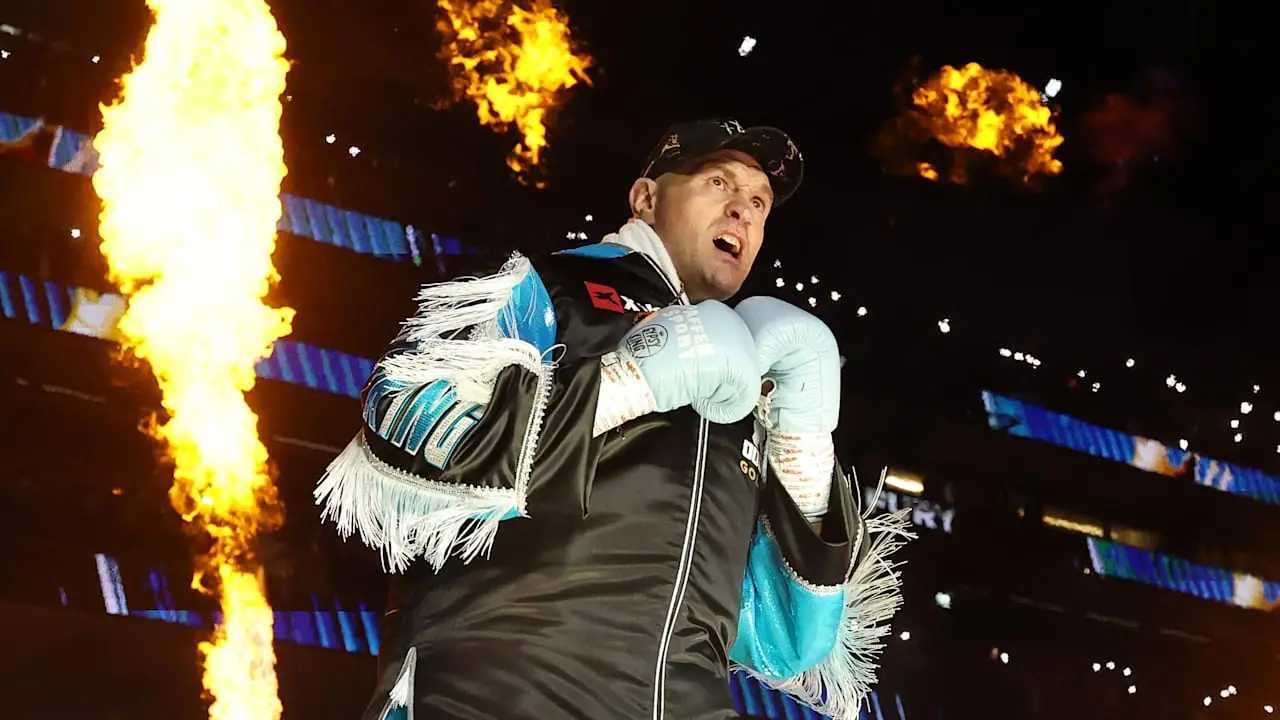
Netflix has announced that it will broadcast the blockbuster heavyweight boxing match between Anthony Joshua and Tyson Fury live, completely free of charge for its 300 million global subscribers. The decision eliminates the typical pay-per-view model that has characterized major fights for decades, making the event accessible to an unprecedented audience. Saudi Arabian financier Turki Alalshikh, a key figure in the sport's recent resurgence, is funding the colossal purses for both fighters, reportedly in the nine-figure range. The bout is expected to take place in October or November, likely at Wembley Stadium in London, pending final negotiations.
A Decade in the Making: The Rivalry Finally Gets Its Stage
The fight between Joshua and Fury represents the culmination of years of anticipation, broken negotiations, and a relentless war of words. Both are British heavyweights who have held world titles, and their clash is being billed as the biggest in the division since Lennox Lewis faced Mike Tyson. The path to this moment has been winding for each man, marked by triumphs, setbacks, and personal tragedies.
Fury, known as the 'Gypsy King,' boasts an undefeated record that includes a monumental victory over Wladimir Klitschko in 2015 and two closely contested losses to Oleksandr Usyk, which ended his reign. He briefly retired after the second Usyk defeat but returned to the ring just last month, defeating Arslanbek Makhmudov by unanimous decision at the Tottenham Hotspur Stadium. Joshua, a former unified champion, has rebuilt after losses to Usyk and a shocking defeat by Andy Ruiz Jr. His redemption arc includes a knockout win over Jake Paul in December 2025 and a subsequent car accident that forced him to postpone a planned February bout. That accident also claimed the life of a close friend, prompting Joshua to take time for personal recovery.
The Saudi Arabian Influence and Financial Backing
Turki Alalshikh, chairman of Saudi Arabia's General Entertainment Authority, has become the most influential non-fighter in boxing. His deep pockets have lured top talent to the Middle East, hosting historic events like Usyk vs. Fury II and the 'Day of Reckoning' card. For the Joshua-Fury showdown, Alalshikh is not only guaranteeing massive payouts—reported at over $100 million each—but also ensuring the fight reaches a global audience via Netflix, bypassing traditional broadcasters. Promoter Eddie Hearn confirmed that while Alalshikh prefers the UK, other venues including the United States and Saudi Arabia remain under consideration. The choice of Wembley would turn the iconic stadium into a cauldron for over 90,000 fans, while a Saudi location could offer a climate-controlled indoor arena.
This partnership between a streaming giant and a sovereign-backed promoter signals a shift in how mega-fights are financed and distributed. Netflix, which has increasingly invested in live sports—from NFL Christmas games to WWE Raw—sees this as a landmark moment to capture the casual sports fan. For subscribers, the no-extra-cost model removes a barrier that typically prices out millions of potential viewers.
Fury's Mouth Runs Wild: The Verbal Assault
True to form, Fury has wasted no time launching a psychological offensive. In a recent interview, he declared: 'I'm going to knock him out, guaranteed. He can't survive against me. He has no chin, and I'll find it because I'm faster and the better boxer.' Such statements are typical of Fury, who uses trash talk to intimidate opponents and sell fights. His record includes memorable rants against Klitschko and Deontay Wilder, the latter of whom he defeated twice. Fury's unorthodox movement, reach, and awkward rhythm have troubled even elite fighters, and his confidence seems undimmed despite his losses to Usyk.
Joshua, typically more reserved, has adopted a measured tone. 'It's no secret I took time to gather myself and rebuild,' he said. 'I'm looking forward to fighting and picking up where I left off.' His focus, however, is first on a mandatory bout scheduled for July 25 in Riyadh against Kristian Prenga, a durable Albanian contender. That fight will serve as a final tune-up, and a victory is essential to keep the Fury showdown on track. Joshua's coach has emphasized that the team is not overlooking Prenga, but the long-term goal remains unmistakable.
Historical Context and Stylistic Breakdown
From a technical standpoint, the clash is fascinating. Fury, at 6'9" (206 cm), uses his height and lateral movement to smother opponents, often leaning on them and wearing them down. His jab is a potent weapon, and his recovery from knockdowns (as seen against Wilder) is legendary. Joshua, slightly shorter at 6'6" (198 cm), is a more traditional power puncher, with devastating knockouts over Vladimir Klitschko, Alexander Povetkin, and Kubrat Pulev. However, his chin has been questioned after the Ruiz stoppage and knockdowns against Usyk. Fury will likely try to use his reach advantage and tie Joshua up inside, while Joshua will look to land his powerful right hand and uppercuts at close range.
The stakes are immense. A victory for Fury would cement his legacy as one of the greatest heavyweights, especially if he can add Joshua's name to a list that includes Klitschko and Wilder. For Joshua, a win would erase the memory of his recent losses and restore him to the pinnacle of the division, paving the way for a third fight with Usyk or a megabout with emerging contender Daniel Dubois.
Netflix's Strategy and Global Reach
Netflix's involvement represents a strategic pivot. The platform has dabbled in live events, but this is its first foray into professional boxing, a sport with a passionate core audience. By offering the fight to all 300 million subscribers without a surcharge, Netflix is betting that the event will attract new subscribers and increase engagement among existing ones. The fight will stream in over 190 countries, with multiple language commentary options. Given the time zone differences, the main event is likely scheduled for the early evening in the UK, which would be evening in the US and early morning in Asia. The technical demands of a live, high-definition broadcast to millions are significant, but Netflix has proven its capability with recent live specials.
Industry analysts point out that this model could disrupt the traditional pay-per-view system, where top fights cost $70-$100 per household. If the Joshua-Fury event proves a success, other streamers like Amazon Prime or Apple TV may follow suit. For fans, it means more access to premium content without breaking the bank.
As the summer approaches, all eyes will be on the mandatory fight between Joshua and Prenga. A convincing victory would set the stage for the autumn showdown. Meanwhile, Fury continues his training camp, alternating between the UK and his conditioning base in Spain. The war of words will undoubtedly escalate, but the real action will come when these two British titans finally step into the ring. For now, the only certainty is that Netflix subscribers will have front-row seats to what promises to be the most significant heavyweight fight in a generation.
Source: sportbild.bild.de News